



 Katie
Goliboski
Katie
Goliboski
Seasons changing and the leaves will fall...
Here at Jody’s Lawn Care, we work all year round, and one of the more varied times of year for us (service wise) is the Fall. During this period, not only are we still maintaining lawns and gardens through application of the last rounds of Fiesta weed spray and specifically formulated Fall fertilizers, but we are also beginning to watch the leaves and plan for Fall clean ups. This service is a great way to prepare your property for the upcoming Winter and lay the foundation for a bright Spring. Whether it is clearing up fallen branches and sticks, raking out garden beds, trimming back ornamental grasses, trimming hedges and bushes, or the basic raking up and taking away the multitude of fallen leaves, Jody’s Lawn Care is here for you!
Fall clean ups can be overwhelming. Let Jody's Lawn Care help!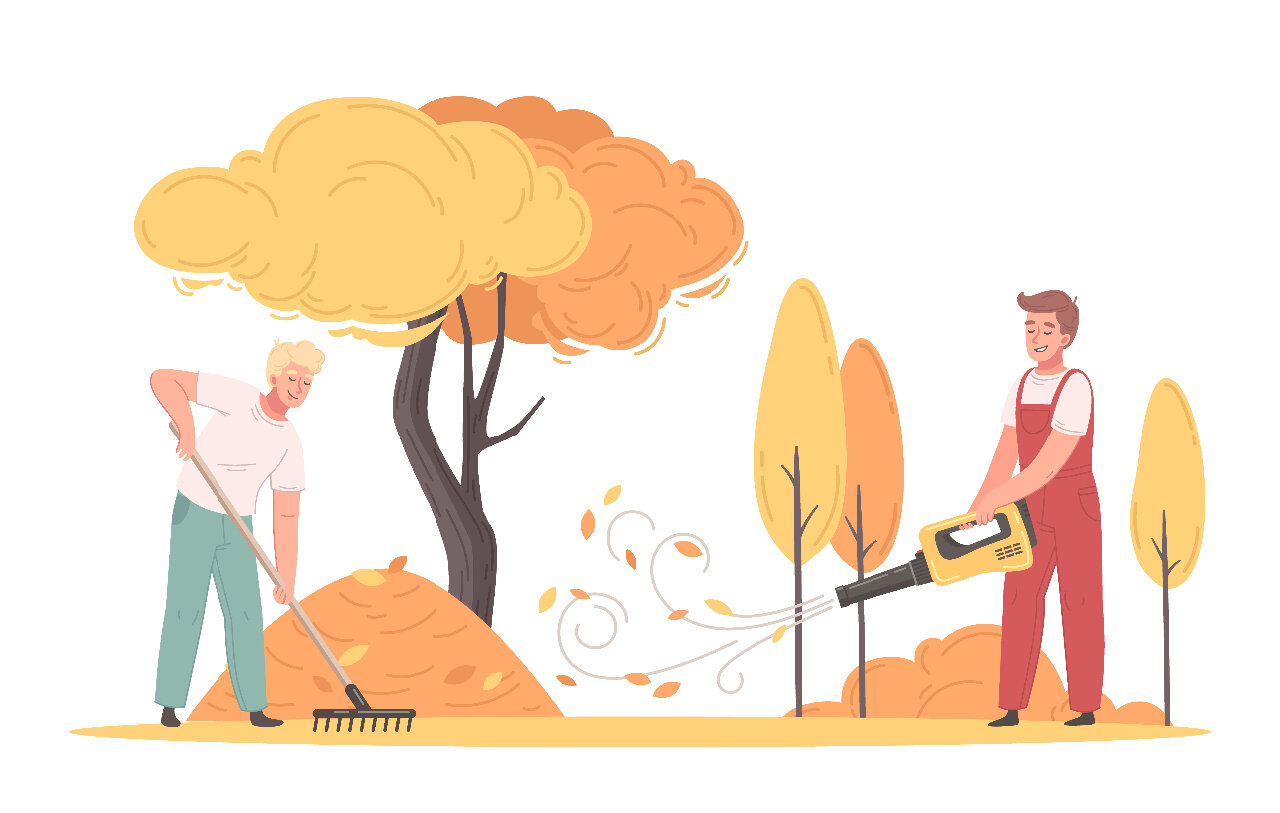
Image by macrovector on Magnific
O Canada – Fall colours across the provinces
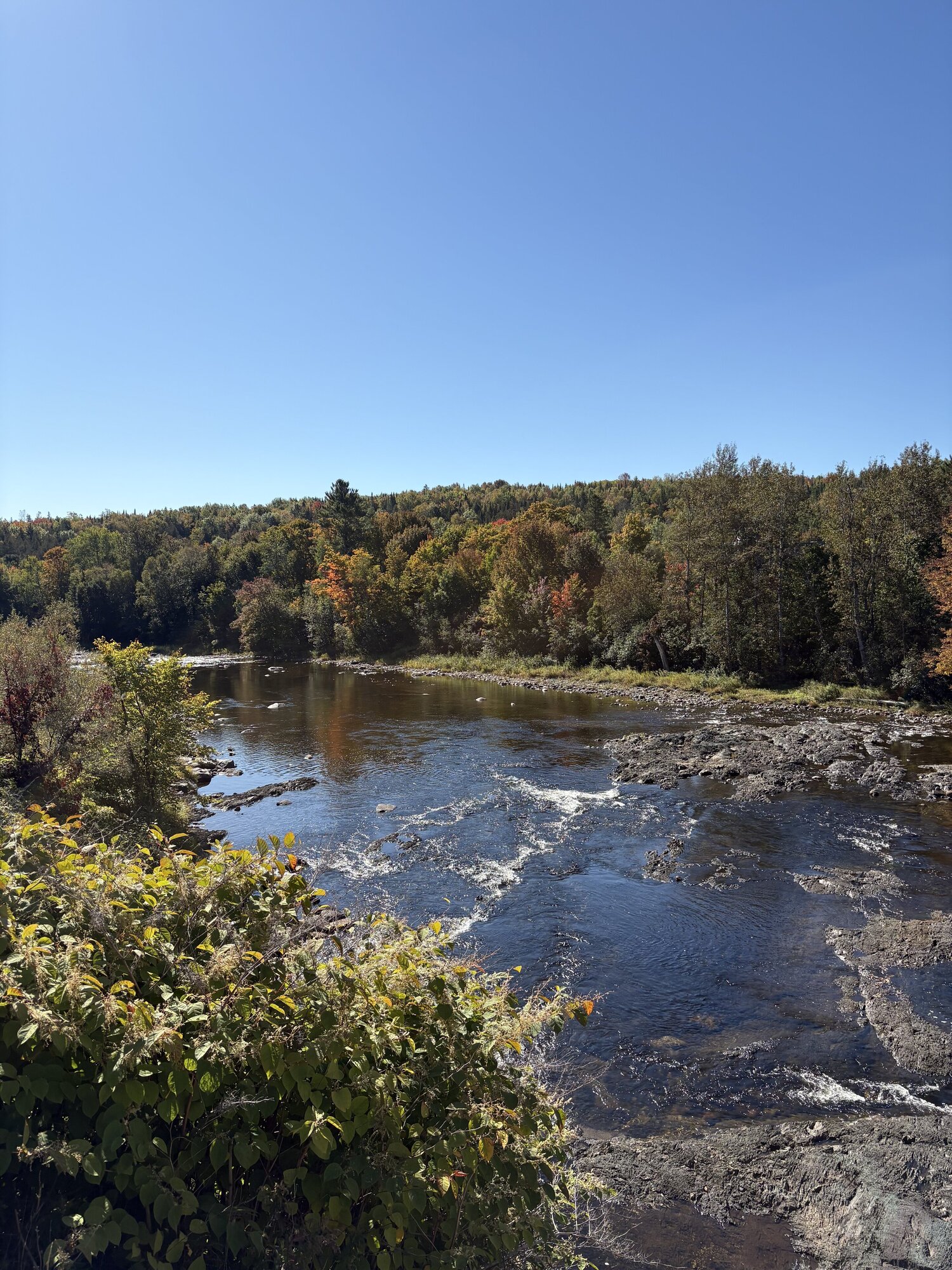
Watching the changing colours of the leaves is a sure sign that the cooler temperatures are here to stay and Winter is on its way. On a recent trip to New Brunswick, Jody and Celia were able to admire the glorious multi-coloured landscapes of the wooded hills and roadways, the breathtaking reds, golds, coppers, and stunning greens; this was especially pleasing when combined with a river or lake filled with shades of blues from clear waters. It was so stark in comparison to the lack of change they had as of yet experienced here in Ontario, especially Norfolk County. It made it obvious why the tours into Northern Ontario, Quebec, and New Brunswick to see the changing leaves were so popular!
When you are driving under what is almost an archway of branches laden with a kaleidoscope of Fall colours along a winding road bordering a picturesque river, it is hard to recall why you live in Ontario and not the East Coast.
Science behind the beauty
Leaves change colour due to chemical reactions and the effects of reduction in sunlight due to the Earth’s changing position. We are all well versed in the knowledge that plants feed off of sunlight, carbon dioxide, and water. It is the combination thereof that leads to the health and wellbeing of the leaves, and the resulting chemical process of photosynthesis. Photosynthesis is the process where light energy is converted into chemical energy, utilizing molecules called chlorophyll to absorb this energy to convert carbon dioxide and water to carbohydrates (sugars). During this process, chlorophyll is consumed, but some of the sugars produced (combined with nutrients from the soil and water) are brought back into the cycle to create more chlorophylls. It is this cycle during the warm months of Spring and Summer that allows a plant to have a renewing source of energy.
Leaves appear green as chlorophyll is great at absorbing blue and red wave lengths of the light spectrum but reflect the green. The availability of the wavelengths in the light spectrum change as the seasons progress, altering the angle of light from the sun through the atmosphere, this along with the change in length of days (and thereby available period of sunlight) creates a negative feedback loop for the leaf energy process. A corky layer of cells develops at the base of each leaf stem due to the cooling temperatures, reducing the availability of nutrients passed between leaf and main tree. Although the cycle continues, with the chlorophyll transmuting as much energy as it can through the reduced sunlight, due to the lower amount of sugar that is able to be produced (and thereby the energy available for chlorophyll production) less new molecules of chlorophyll can be produced than are necessary for sufficient production. More energy is expended to utilize consumed energy versus what is produced through photosynthesis. In the long term, this results in less light being absorbed through the lack of chlorophylls, and a nonexponential rate of chlorophyll synthesis results. This reduction occurs daily until eventually the plant (tree) runs out of chlorophyll gradually, reflecting less and less of the green waves of light, fading the green from the leaves. As an outcome, the natural colours of the leaves are exposed, being the yellows and oranges that are produced by pigments called xanthophylls and carotenoids (we all know carotene from grade school, think carrots).
These colourants were always there, but the intense reflection of the green obscured them. The reds and purples/auburns that we see in some areas/species are the result of another pigment chemical call anthocyanins. These components are not found in tree leaves until later in the summer, as the rate of growth decreases and the season fades out; only then are they produced as a result of the combination of sugar retained in the leaves and sunlight.
What is the relationship to temperature?
When day length begins to shorten, deciduous trees take this as a sign that Winter is on the horizon. The encourages them to start preparing for a dormancy period. It is the cooler nights (when temperatures stay above the freezing mark) and the warmer days which mimic a fairly normal timing cycle and lead to the spectacle of reds and purple leaf colouring. When the warmer temperatures hold on, delaying the temperature changes and signals to the trees, leaves that do turn are less vibrant in colour, more muted and matte. This can also be affected by abnormally hot Summer periods, again delaying the temperature transitions that the trees rely on to signal them for Winter. Leaves amy also be scorched by high temperatures and brown (die) early. Finally, an abnormally early frost can result in an early leaf drop, which immediately ceases the colour development and leads to leaves sometimes retaining their green colouring as they fall.
What about rainfall?
Logic dictates that the amount of moisture deposited throughout the seasons has a heavy impact on leaf development in trees. If we have a fairly normal (adequate) amount of rain throughout the Summer, trees remain healthy and it is reflected in vibrant, rich, leaf colours. Should we experience a drought, trees can be stressed and may reserve energy early. They may drop leaves earlier than usual before colours have changed, or the somewhat reverse may occur and leaves may jump to brown (dead) before they have a chance to exhibit colours.
The worst case scenario seems to be that if we have a wet, extreme rainfall season, leaves can be physically blown/weighed down from limbs, or retain moisture and (when combined with warmer temperatures) lead to fungal disease development.
How can this affect your Fall clean up planning?
Many of our customers request that we do not plan their Fall clean up until all the leaves have fallen. This is a great idea in principle, but sometimes Mother Nature has other ideas. Last year, for instance, we were still waiting for the leaves to fall at some of the properties on our list when snow struck! This meant we had to switch gears to our snow clearing services and, unfortunately, we were not able to complete a number of properties that had requested we wait. This led to some heavier than usual Spring clean ups, and was frustrating for some of our customers. As we are in Canada, some of our Norfolk County customers plan on having two Fall clean ups, as a fail safe for ensuring the bare necessities (such as branch clean up, garden clearing and pruning) occur before the risk of snow hovers over head. As our clean ups are priced based on the number of team members required and how long it takes to complete, in the grand scheme this does not affect the overall cost too much.
We are attentive to the requests of our customers, so our clean ups can include not only blatant leaf removal, but also laying new mulch in preparation for next Spring, trimming back ornamental grasses, pulling plants that are finished for the season, taking away yard waste and (now that trees are entering their dormant stage) trimming back tree limbs and hedges. This is also a great time to get in that last minute seeding. Although you will not get the immediate green effect of a Spring seeding, seeding in the Fall requires less watering, encourages better surface contact with soil for germination (a frost can be a great help in pulling seed deeper into soil to encase it in the dirt), In the Spring, the seeds are prepped to grow, and your Spring grass looks refreshed and lively!
We will continue to perform these services until the snow flies, so be sure to call and book as soon as possible to get ahead of Mother Nature!
Seasons End
Although the green season is not quite over, we are beginning to look ahead. We are finishing up our last applications of weed spray and fertilizers, trying to get them complete before the snow falls and while the grass can still benefit. Rates of growth for grass are starting to slow, but not stop, so we will continue cutting until we get a real change. Many of our properties are switching to a bi-weekly schedule to account for the slowing, but some are still growing like hay fields! We have also been picking up some one off cuts for properties that in general have a slow rate of growth and have not needed as much care as others, and we are happy to help their property owners – one time cuts are not slighted here, instead we take pride in returning a property to maintained status.
The mornings are getting colder, with the first real frost having occurred this week, but the afternoons are still revelling in strong sunlight and maintaining warmer temperatures. Based on our above tree leaf information, perhaps we will be honoured with some reds and purples in our foliage due to a fairly normal temperature cycle. The colours have been noticeably changing here in Simcoe, but yield a lot more yellows and oranges than bright reds and deep maroon. Time will tell if we get anything resembling the glory that was seen out East.
What can you do before the snow falls?
There are a number of options for things you yourself can do in preparation for the coming Winter. Some basics are ensuring your sprinkler lines are blown out, the outdoor taps covered and winterized, as well as making sure window wells are covered to prevent snow and ice build up. Ensuring your eaves are clear of debris and leaves is important as well, just in case there are spells of warm temperatures and rapid melts. Making sure all your equipment is put away properly so it is not left out to the elements is a simple, but sometimes forgotten task as well.
Jody's is here for you!
Finally, be sure to call us here at Jody’s Lawn Care to have a visit with our estimator to assess your property needs and Fall clean up potential. We are happy to come provide a free estimate, even to assure you that you are in fact doing everything you need to be doing to prepare for Winter. We service all of Norfolk County, including Simcoe, Port Dover, Delhi, Waterford, and Vittoria. Our team are quick and efficient to ensure your property looks its best and is ready to promote a bountiful Spring season. We have all the tools we need, and no project is too small. We look forward to hearing from you to help with your Fall preparations!